Writing an agentic conversational game - I
The idea
My first computer was a Sinclair ZX81, but after only a few months, my father sold it and bought a ZX Spectrum. Thanks to the Spectrum, I learnt to code, but most of the time I spent with this computer, and this was a good part of my childhood, I was playing games.
And one of my favourite types of games was conversational games.
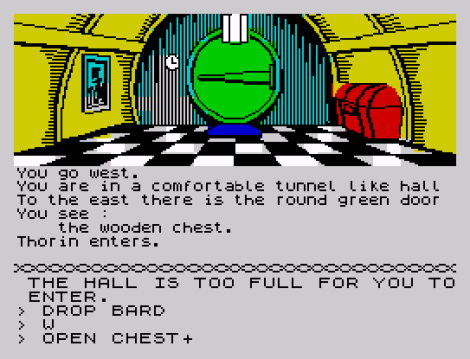
So why not try to recreate games like this one, but with LLMs to have actual conversations? How hard can it be? (Famous last words). Let’s find out!
The plan
My go-to model is GPT. At the moment of starting this project, GPT 5.4 was already announced but not yet released, so I used GPT 5.3 (web interface).
This is the initial prompt:
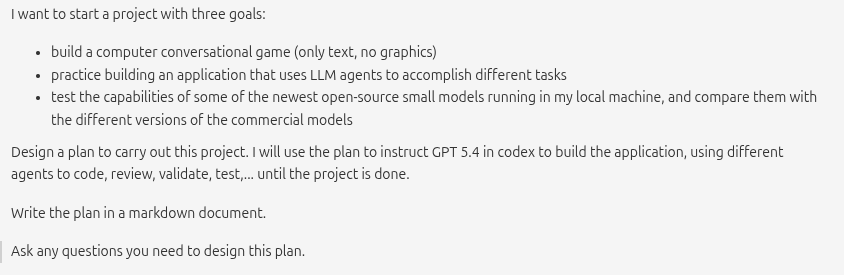
And this is the answer:
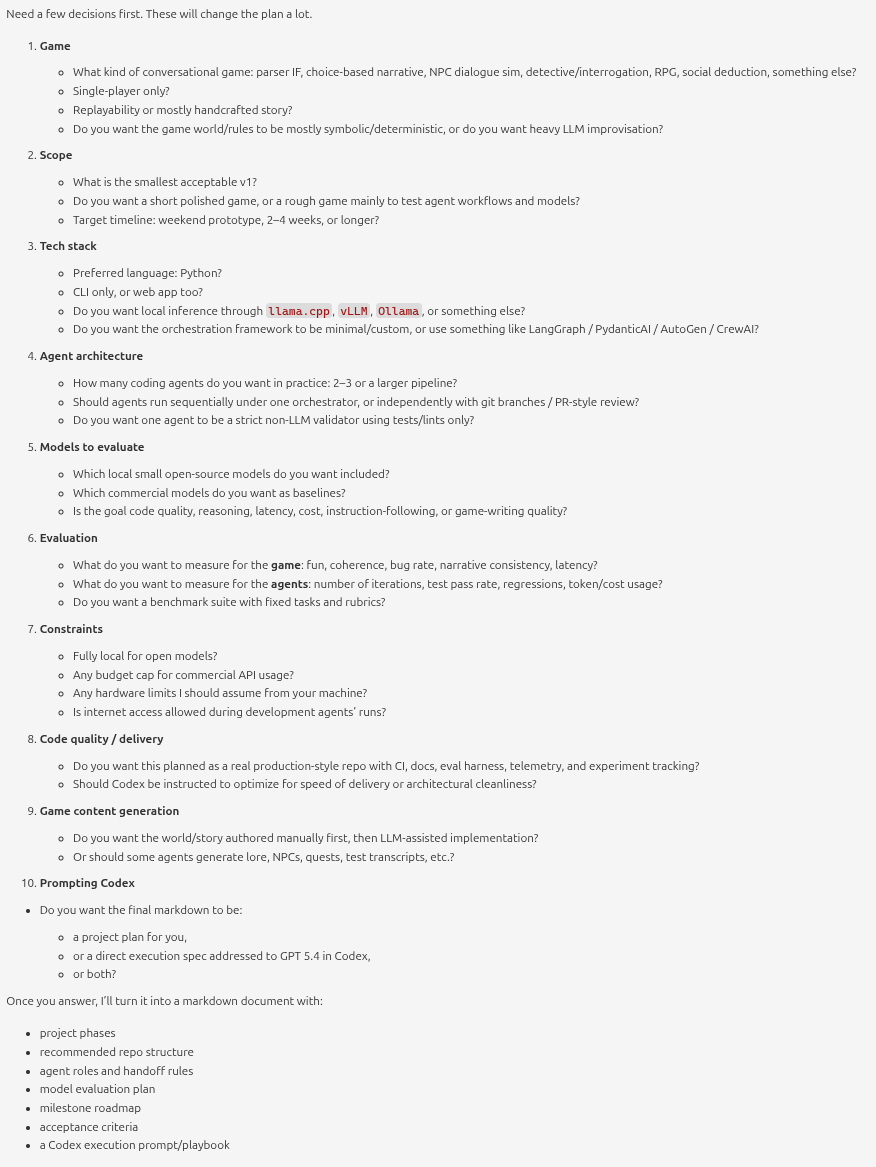
Ok then, let’s clarify things first:
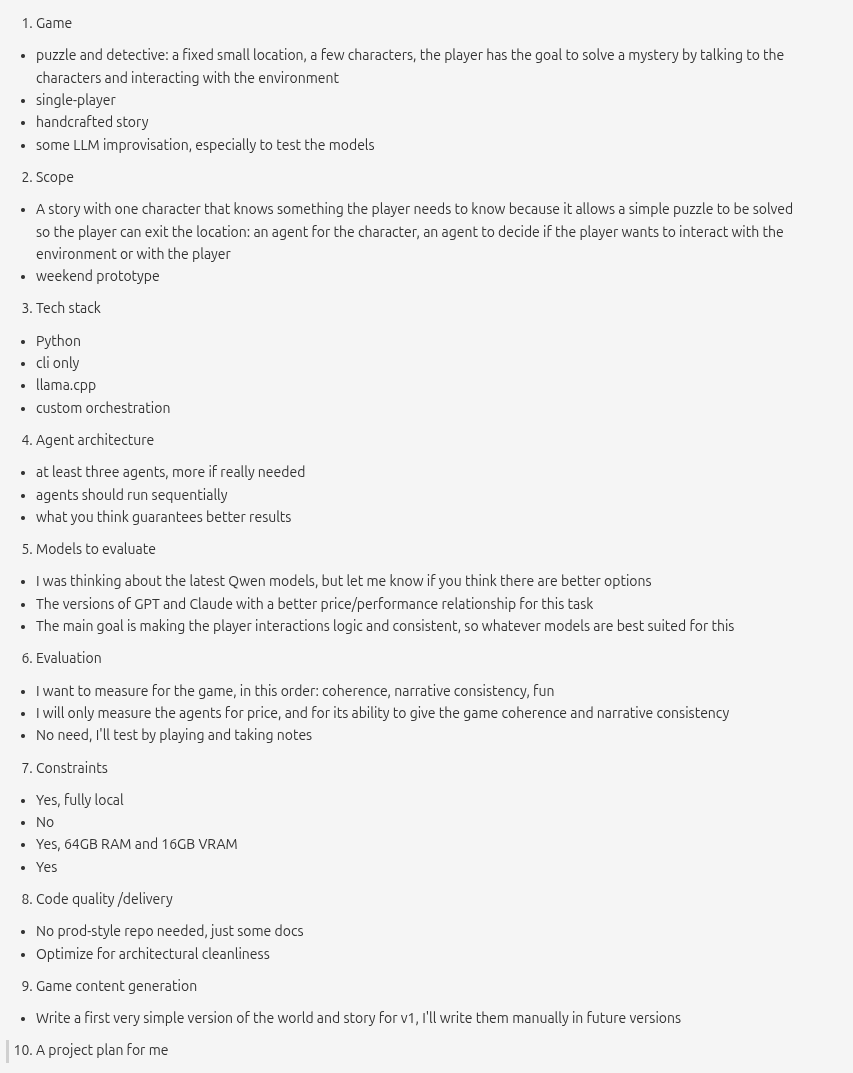
And finally:
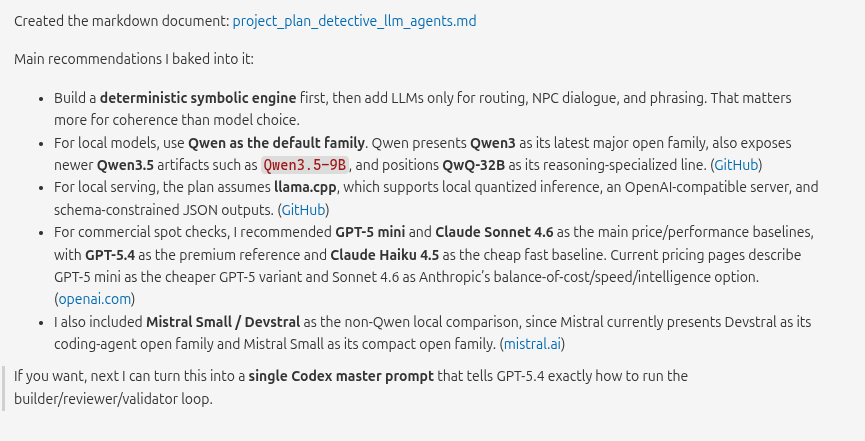
The plan is quite comprehensive.
The review
But is it a good plan? Let’s ask Claude! I fed Claude Opus 4.6 the original prompt, the questions from ChatGPT, my answers, and the plan. This was Claude’s answer:

I was interested in knowing more about the model recommendations:
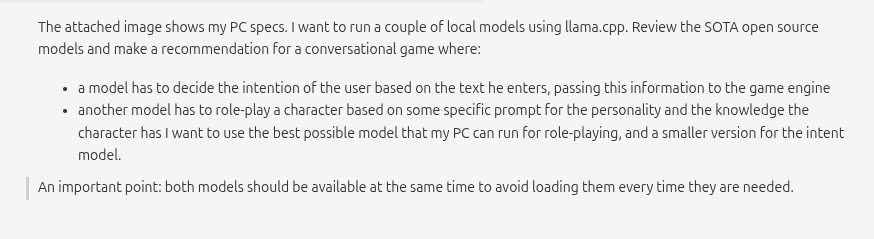
I have an NVIDIA GeForce RTX 5060 Ti with an AMD Ryzen 9 7900 × 24 and 64 GB of RAM running on Ubuntu 24.04. This was his (its?) recommendation:
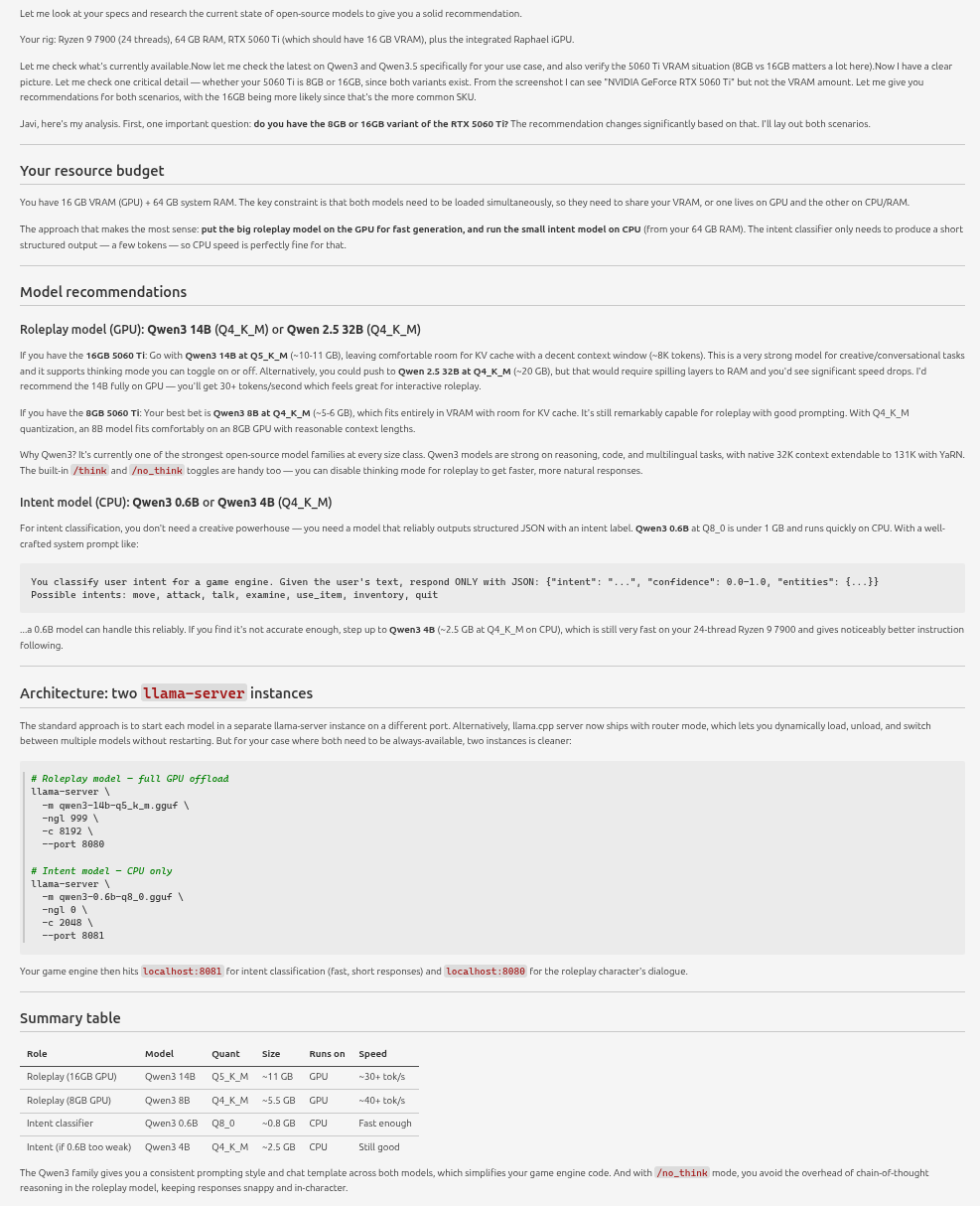
A problem with conversations like this one is that the model finds a recent result (Qwen-3) but doesn’t bother to check if there is a better option that wasn’t available when the model was trained, as is the case with Qwen-3.5, which was announced in mid February. (To be fair, this happens less with ChatGPT). I have to ask Claude to double-check:

After that, he did a web search to get all the data:
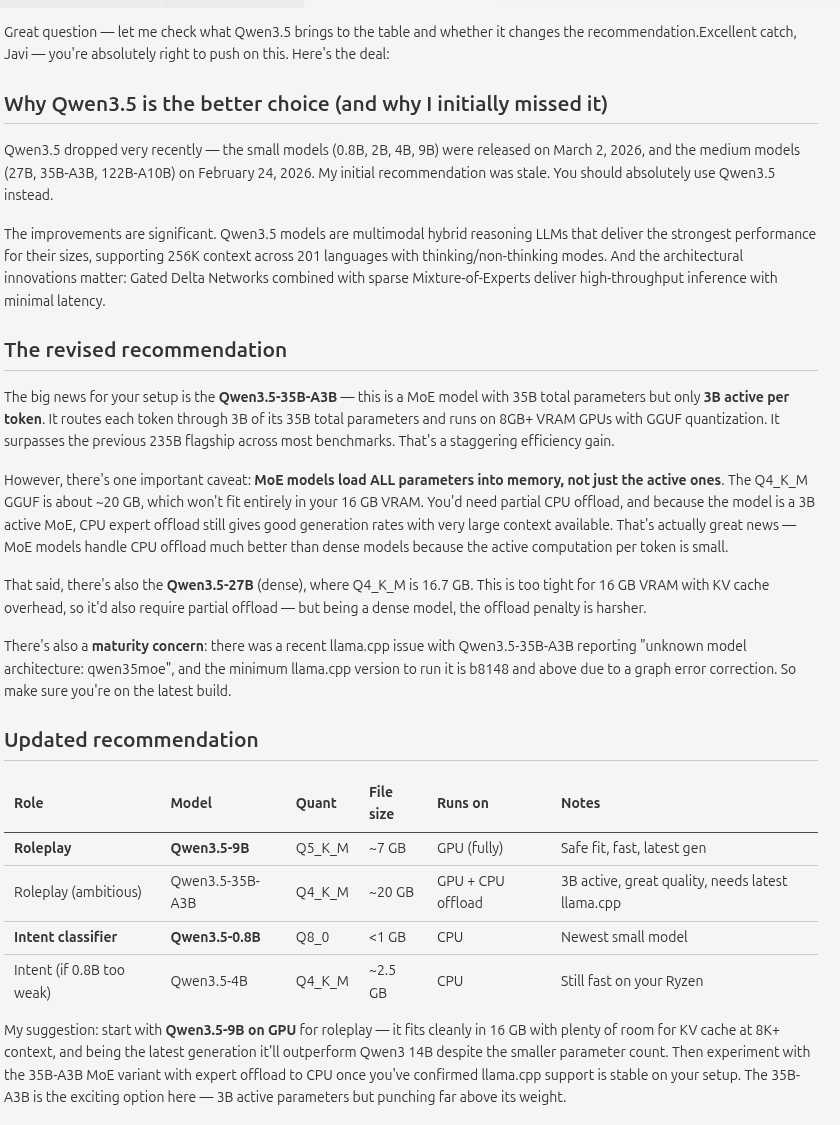
I find it interesting that he uses this sycophantic tone to recognize the mistake.
We are now ready to start the coding phase.